Many construction teams in Bradford assume that if the ground looks dry, it behaves like a drained material. That assumption can lead to serious trouble when dealing with West Yorkshire's glacial till and reworked Pennine mudstones. Unsaturated soil analysis reveals the true shear strength and volume change potential of these soils by measuring matric suction. Without this data, designs based on saturated parameters alone overestimate bearing capacity and underestimate settlement. Combining this approach with a calicata exploratoria allows direct observation of moisture profiles and fissure networks before any lab work begins.
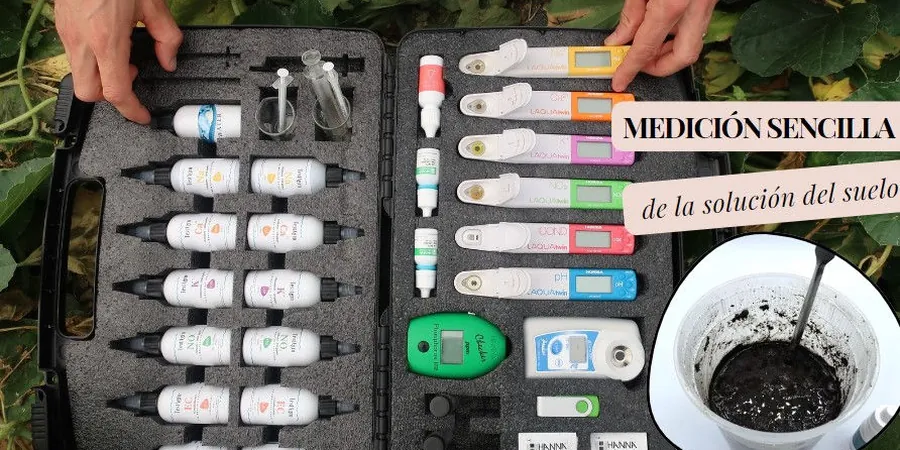
A change in suction from 50 kPa to 200 kPa can double the apparent cohesion of Bradford till – ignoring that is a design error.
Method and coverage
Regional considerations
Bradford's glacial till contains a high proportion of silt-sized particles and occasional cobbles, creating a dual‑porosity fabric. Macropores along root channels and desiccation cracks allow rapid infiltration during heavy rain, while the matrix remains unsaturated. When a sudden wetting front arrives – typical of West Yorkshire's 1,000 mm annual rainfall – the suction collapses, and the soil loses its apparent cohesion. This mechanism has triggered shallow foundation settlements in the Manningham and Heaton areas. Unsaturated soil analysis quantifies that suction‑loss risk before the foundation is poured.
Process video
Standards that apply
BS 5930:2015 (Code of practice for ground investigations), BS 1377-2 (Filter paper method for suction measurement), Eurocode 7 – BS EN 1997-1:2004 (Geotechnical design – general rules)
Complementary services
SWCC Determination & Suction Profiling
Full soil-water characteristic curve from pressure plate and dew‑point hygrometer data, covering the 0–150 MPa suction range. We apply the van Genuchten–Mualem model and report air‑entry value, residual water content, and unsaturated hydraulic conductivity function. Typical turnaround is 10 working days.
Unsaturated Triaxial Testing
Consolidated drained triaxial tests with controlled suction using axis translation technique (BS 1377-8 adapted). We measure φᵇ and cohesion intercept under matric suctions of 50, 100 and 200 kPa. Results are delivered with full stress paths and Bishop's effective stress parameter χ.
Typical parameters
Top questions
Why is unsaturated soil analysis relevant for Bradford's glacial till?
The reference range for this service in Bradford is £730 - £2.860. The final price depends on the project scope and volume.
How much does an unsaturated soil analysis cost in Bradford?
A standard package including SWCC determination plus three unsaturated triaxial tests ranges between £730 and £2,860 depending on the number of suction stages and the required reporting detail. Volume discounts apply for multi‑borehole projects.
What is the difference between saturated and unsaturated shear strength?
In saturated soils, effective stress equals total stress minus pore water pressure. In unsaturated soils, an additional term called suction stress (or apparent cohesion) contributes to the effective stress. Unsaturated shear strength can be 30–60 % higher than the saturated value at the same net normal stress.
Which standard do you follow for SWCC measurement?
We follow BS 1377-2 for the filter paper method and BS 1377 for pressure plate extraction. All results are fitted using the van Genuchten equation. The report includes the SWCC curve, the unsaturated hydraulic conductivity function, and a comparison with published data for Pennine till.
Can you run unsaturated tests on disturbed samples?
No – unsaturated behaviour is extremely sensitive to fabric and void ratio. We require undisturbed block samples or thin‑walled tube samples (75 mm minimum diameter) extracted from trial pits or boreholes. The sampling procedure follows BS 5930 Section 6.4 to preserve natural moisture content and structure.