Bradford’s landscape, carved by glacial meltwaters and fed by the River Aire, leaves a legacy of organic-rich alluvial soils and peat deposits in many low-lying wards. These materials behave nothing like mineral soils — they creep, compress, and lose strength when loaded. For any development on Bradford’s floodplain or former mill ponds, a proper organic soil management plan is the first step. We combine field reconnaissance with laboratory index tests to map the distribution and decomposition state of these organic layers. Without this baseline, Improvement or foundation design rests on guesswork. Our approach follows BS 5930 and Eurocode 7, ensuring every recommendation ties back to measured properties rather than assumptions.
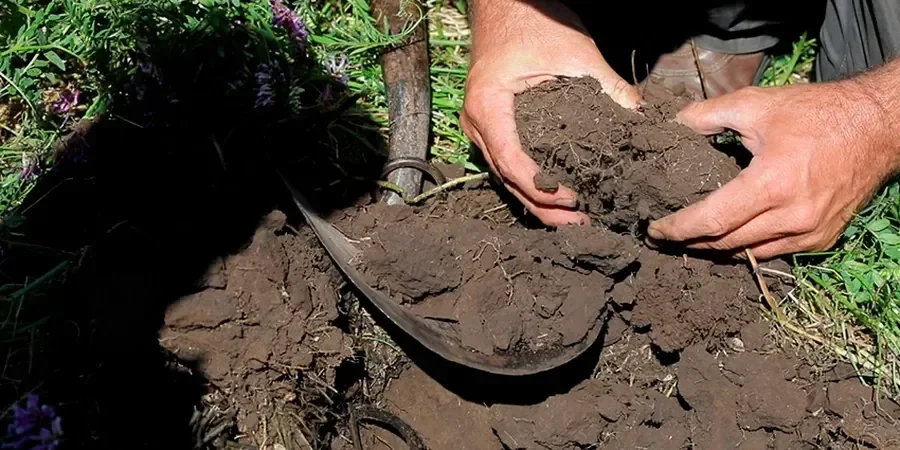
Bradford’s peat can hold over 200 per cent water by weight — ignore it and your slab cracks before it cures.
Method and coverage
- Organic content by loss on ignition — anything above 20 per cent demands special treatment
- Fibre content and von Post humification class for peat
- Natural moisture content — often exceeding 200 per cent in Bradford’s peats
Regional considerations
Compare a site in Shipley with one on the alluvial terraces of the Bradford Beck — the organic soil management challenge flips entirely. In Shipley, shallow peat layers can cause differential settlement that cracks masonry in the first winter. On the Beck terraces, buried organic silt may not trigger immediate failure but will consolidate slowly under load, dragging foundations down over years. The real risk in Bradford is assuming all brown ground is stable. Without proper organic soil management, you trade a small investigation cost for a structural repair bill that dwarfs it. We document every lens and layer to keep that risk contained.
Standards that apply
BS 5930:2015 – Code of practice for ground investigations, Eurocode 7 (EN 1997-1:2004) – Geotechnical design, BS EN 1997-2:2007 – Ground investigation and testing
Complementary services
Field investigation and sampling of organic soils
Trial pits and windowless sampling to retrieve undisturbed cores from peat and organic silt layers. We log colour, odour, fibre content, and groundwater conditions on site, then seal samples for transport to our UKAS-accredited laboratory.
Laboratory classification and consolidation testing
Loss on ignition, moisture content, Atterberg limits on organic fractions, and one-dimensional consolidation tests to determine compression index and coefficient of consolidation. Results support settlement predictions and Improvement design.
Typical parameters
Top questions
Why is organic soil management critical for construction in Bradford?
Bradford has extensive areas of peat and organic alluvium, especially along the Aire valley and its tributaries. These soils are highly compressible and can lose bearing capacity when wet. Organic soil management identifies these zones early, allowing designers to choose appropriate foundation solutions or Improvement before construction begins.
What tests do you run to classify organic soils?
We run loss on ignition to quantify organic content, natural moisture content, fibre content analysis, and von Post humification classification for peats. For organic silts and clays, we also perform Atterberg limits and one-dimensional consolidation testing to predict settlement behaviour.
How much does an organic soil management study cost in Bradford?
Costs typically range between £700 and £2,240 depending on site access, number of trial pits, and the suite of laboratory tests required. A small residential plot with two pits and basic classification sits at the lower end; larger development parcels with consolidation testing fall at the higher end.
Can you treat organic soils on site instead of removing them?
Yes, depending on the depth and organic content. Options include preloading with vertical drains to accelerate consolidation, deep soil mixing with lime or cement, or lightweight fill substitution. Our organic soil management report evaluates each method against the measured properties of the specific peat or organic silt layer.