The contrast between the sandstone-dominated slopes of Ilkley Moor and the softer Carboniferous shales underlying the city centre tells you everything about why debris flow analysis in Bradford demands a local eye. In our experience, the steep catchment above Heaton Woods behaves entirely differently from the gentler, clay-rich terrain around Bowling Park, and a one-size-fits-all model simply does not work. We begin each assessment by coupling LiDAR-derived topography with historical rainfall records from the Worth Valley, then perform a calicata exploratory to inspect the colluvium profile directly. Only with that ground-truth can we run reliable runout simulations for the specific soil mantles of Bradford's Pennine fringe.
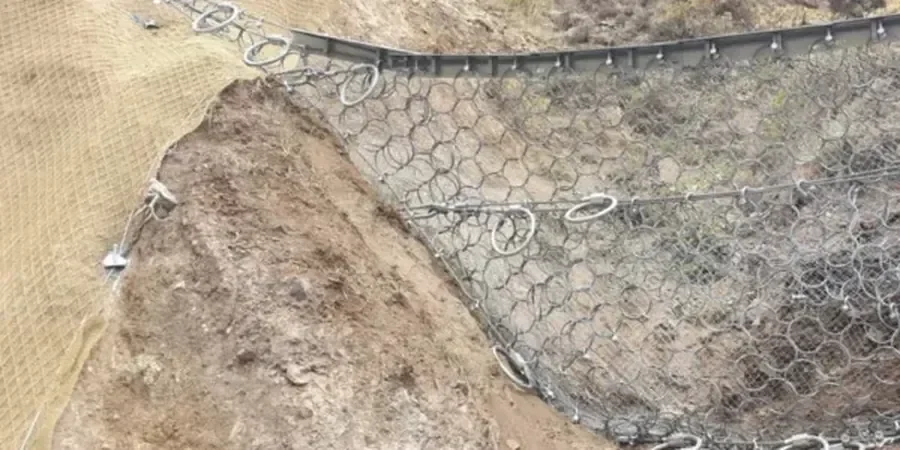
A debris flow analysis in Bradford that ignores the local drift geology and Pennine rainfall regime is a liability, not a geotechnical report.
Method and coverage
Regional considerations
The rig used for extracting undisturbed samples from Bradford's debris fans is a track-mounted hydraulic corer that can reach 6 metres into the bouldery colluvium without disturbing the fabric. What we have seen repeatedly is that the real risk lies not in the initial failure but in the sudden bulking of the flow as it entrains saturated topsoil and vegetation in the lower reaches. A debris flow analysis that stops at the source zone and ignores the entrainment potential along the transport path will underestimate the volume by a factor of two or more, particularly in the wooded gulleys above Thornton and Denholme.
Standards that apply
BS 5930:2015 (Code of practice for ground investigations), Eurocode 7 (BS EN 1997-1:2004) – geotechnical design, FHWA-NHI-05-077 (debris flow hazard methodology)
Complementary services
Reconnaissance-Level Debris Flow Screening
A rapid desktop and field walkover that identifies potential source zones, estimates runout using empirical fahrböschung angles, and produces a preliminary hazard rating. Suitable for early-stage planning on the lower valley slopes of Bradford.
Dynamic Runout Modelling with FLO-2D
A full numerical simulation incorporating LiDAR topography, rainfall return-period data, and measured soil properties. This service outputs flow depth, velocity maps, and impact pressures for detailed design of mitigation works on high-risk sites above Heaton or on the A650 corridor.
Typical parameters
Top questions
What is the difference between a debris flow and a landslide in the context of Bradford's geology?
A landslide typically involves a coherent mass of soil or rock sliding along a discrete shear surface, while a debris flow is a rapidly moving, fluidised mixture of soil, rock, and water that travels down a channel. In Bradford's Pennine slopes, the distinction matters because debris flows can travel much farther than landslides of similar volume, often reaching developed areas in the Aire Valley floodplain.
How much does a debris flow analysis for a residential development in Bradford cost?
For a typical hillside plot in the Bradford district, a full debris flow analysis including field sampling and dynamic modelling ranges between £880 and £2,940. The final cost depends on the size of the contributing catchment, the number of source zones, and whether access requires specialised coring equipment on steep ground.
What trigger thresholds are used to define debris flow initiation in this region?
We apply the local antecedent rainfall index combined with a 24-hour intensity threshold of 80–120 mm, calibrated against the British Geological Survey's historical landslide database for West Yorkshire. The threshold is lower for slopes underlain by the shales of the Bowland Shale Formation than for the more permeable Millstone Grit catchments.