Ground investigation in Bradford forms the essential first phase of any construction or civil engineering project, encompassing a suite of techniques designed to characterise subsurface conditions. This category covers everything from desk studies and walkover surveys to intrusive testing and in-situ sampling, all aimed at mitigating ground-related risks. In a city where post-industrial land, steep valleys, and historic fill materials are common, understanding what lies beneath the surface is not just prudent but often a regulatory requirement. Whether you are planning a housing development, a highway extension, or a retail park, a robust investigation programme ensures structural integrity, cost control, and compliance with UK law.
Bradford’s geology is a patchwork that demands careful attention. The city sits largely on Carboniferous Millstone Grit and Coal Measures, which bring challenges such as variable bedrock strength, historical mine workings, and potential for ground gas migration. Superficial deposits including glacial till, alluvium, and river terrace gravels along the Aire Valley further complicate the picture. These conditions can lead to differential settlement, slope instability, or contaminated land issues, particularly on former industrial sites. A thorough investigation programme, often beginning with a Standard Penetration Test (SPT), provides the quantitative data needed to design foundations, earthworks, and remediation strategies suited to these local quirks.
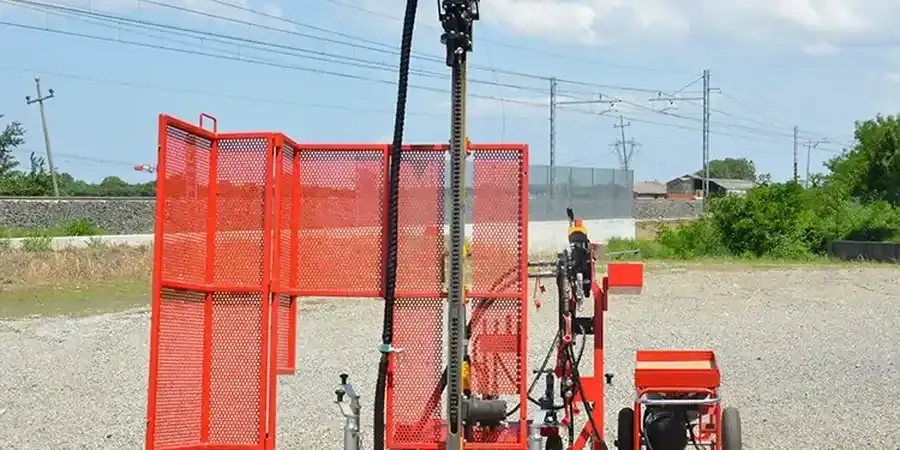
The regulatory framework governing ground investigation in Bradford is firmly rooted in national standards, with Eurocode 7 (BS EN 1997) serving as the cornerstone for geotechnical design. This requires investigations to be planned, supervised, and interpreted by competent professionals, typically following the guidelines set out in BS 5930 for site investigation and BS 10175 for contaminated land. When contamination is suspected, the Environment Agency’s Land Contamination Risk Management (LCRM) framework applies, linking directly to planning conditions and Part 2A of the Environmental Protection Act 1990. Local planning authorities, including Bradford Council, routinely condition investigations to ensure that any land affected by historical use is made suitable for its intended purpose, protecting both human health and controlled waters.
The types of projects that trigger the need for a full ground investigation in Bradford are diverse. Residential developments on greenfield or brownfield land require detailed geotechnical and environmental assessments to satisfy Building Control and NHBC standards. Infrastructure schemes, such as the proposed mass transit network or upgrades to the city’s Victorian drainage systems, depend on accurate ground profiling to avoid clashes with buried services or unstable ground. Commercial ventures, from city centre high-rises to out-of-town logistics hubs, rely on investigation data to de-risk their investment. Even smaller domestic extensions can fall under scrutiny if they are located in areas of former mining activity, where a simple SPT can reveal crucial information about shallow strata.
Available services
Common questions
What is the purpose of a ground investigation in Bradford?
A ground investigation determines the physical, chemical, and geotechnical properties of soil and rock beneath a site. In Bradford, this identifies hazards like mine workings, contaminated land, or weak alluvial soils, ensuring foundations are designed safely and meet the requirements of UK building regulations and Eurocode 7.
When is a ground investigation required by Bradford planning authorities?
Investigations are typically required as a planning condition for any development on potentially contaminated land, in mining areas, or where ground conditions are uncertain. Bradford Council follows national policy, often requesting a Phase 2 intrusive investigation that complies with BS 10175 and the LCRM framework before construction can begin.
How deep should a ground investigation go for a typical Bradford development?
The depth depends on the proposed structure and local geology. For a standard housing plot on glacial till, boreholes might extend 5–10 metres. However, in former mining districts or for deep foundations, investigations must reach well below the zone of influence, often 20 metres or more, guided by BS 5930 recommendations.
What are the common ground hazards found during investigations in Bradford?
Frequent hazards include shallow coal mine workings, pockets of gas from old landfills, compressible alluvial deposits along river corridors, and chemical contamination from historical textile and engineering industries. A properly scoped investigation, including in-situ tests like the SPT, is essential to map and mitigate these risks.