The ground beneath Bradford is shaped by its glacial history, with most of the city sitting on deposits of till and laminated clay overlying Millstone Grit bedrock. These layers vary significantly in thickness, and the water table can be high in low-lying areas near the Aire Valley. A proper bearing capacity analysis is the only way to determine whether the soil can support the loads from a new building, extension, or retaining wall. Without this calculation, foundations risk differential settlement or even failure. We combine on-site testing with laboratory data to deliver values you can trust for your project in Bradford.
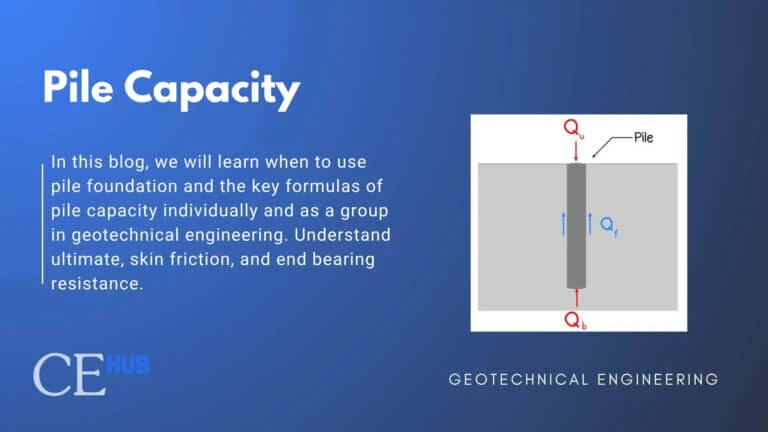
A proper bearing capacity analysis in Bradford identifies hidden soil variations that can cause differential settlement or foundation failure.
Method and coverage
Regional considerations
The risk of proceeding without a bearing capacity analysis in Bradford is real and measurable. We have seen projects where shallow foundations were placed on clay that appeared stiff but contained lenses of soft silt. The result was uneven settlement that cracked internal walls and jammed doors within two years. For a typical residential extension, the cost of this analysis is a fraction of the repair bill that follows a foundation failure. Our engineers use a calibrated plate load test or SPT rig to obtain site-specific data, and we cross-check the results against the geological maps of the Bradford district. This gives you certainty before any concrete is poured.
Standards that apply
BS EN 1997-1:2004 (Eurocode 7 – Geotechnical design), BS 5930:2015 (Code of practice for ground investigations), BRE 365 (Soakaway design – supplementary guidance)
Complementary services
Plate Load Tests
In-situ tests to measure the bearing capacity of shallow soils directly. We use a hydraulic jack and calibrated load cell, following BS 1377 and BS 1377. Results are plotted as load-settlement curves.
Bearing Capacity Calculations
Analytical derivation of ultimate and allowable bearing capacity using Terzaghi, Meyerhof, and Eurocode 7 methods. We account for soil cohesion, friction angle, water table depth, and eccentric loading.
Foundation Design Recommendations
Based on the analysis, we advise on footing type, dimensions, and depth. For weak soils we may recommend Improvement or deep foundations, and we coordinate with structural engineers in Bradford.
Typical parameters
Top questions
What is the typical cost of a bearing capacity analysis in Bradford?
For a standard residential plot, the cost ranges between £510 and £1,440 depending on the number of test points and the depth of investigation. This includes site work, laboratory testing, and a detailed report with allowable bearing pressures.
How deep do you need to test for bearing capacity in Bradford clay?
We usually test to a depth of at least 1.5 times the proposed footing width, or until we reach a competent stratum. In Bradford, this often means drilling through 2–5 m of till or clay before encountering sandstone bedrock.
Can I use a bearing capacity analysis from a nearby site?
No, each site in Bradford has unique soil conditions due to glacial variability. Adjacent plots can have different water tables, cobble content, or clay stiffness. A site-specific analysis is essential for safe foundation design.