Geotechnical laboratory testing in Bradford forms the essential backbone of safe and cost-effective construction across the district. From the steep-sided valleys of the Pennine fringe to the post-industrial city centre, ground conditions vary dramatically over short distances, making desk-based assumptions dangerously unreliable. A comprehensive laboratory programme provides the quantitative data engineers need to design foundations, assess slope stability, and manage earthworks with confidence. Without this physical evidence, even the most experienced practitioner is working blind, risking structural failure or unnecessary over-design that inflates project costs and carbon footprint.
Bradford's underlying geology presents a complex mosaic that directly influences laboratory test selection. Much of the city centre and southern suburbs rest on the Carboniferous Coal Measures, a cyclic sequence of sandstones, siltstones, mudstones, and historically important coal seams. These rocks are often mantled by glacial till, a stiff, over-consolidated clay containing cobbles and boulders dropped by retreating ice sheets. Valley bottoms contain variable alluvium, while higher ground to the west transitions into the Millstone Grit, a coarse-grained sandstone that forms the dramatic crags of Ilkley Moor. This geological variety means a single site might require a soil classification (USCS/AASHTO) to distinguish a sandy glacial deposit from a weathered sandstone, followed by strength testing tailored to each distinct stratum.
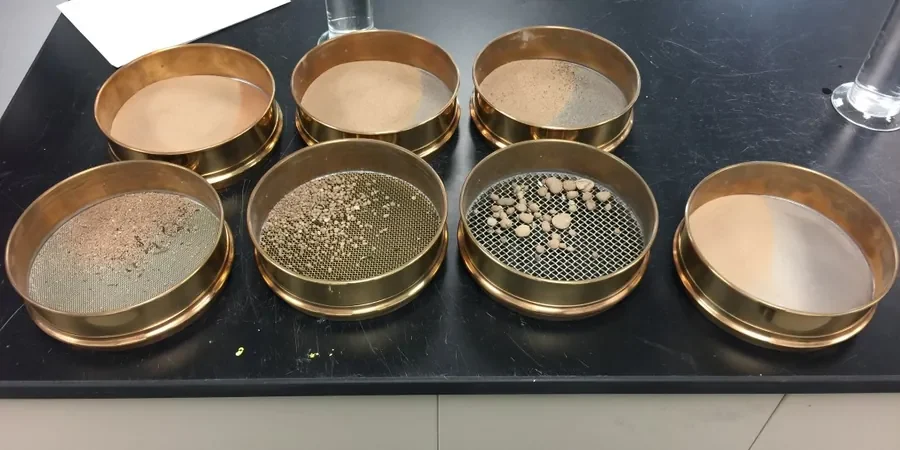
All laboratory work undertaken for construction projects in Bradford must comply with the rigorous standards set out in British and European codes, primarily BS 5930 (Code of practice for ground investigations) and BS 1377 (Methods of test for soils for civil engineering purposes). These specify everything from sample preparation to testing apparatus calibration. Crucially, Eurocode 7 (BS EN 1997-2) mandates that the selection, execution, and interpretation of laboratory tests be supervised by a geotechnical specialist who understands the local ground model. A soil mechanics study that does not reference these standards will not satisfy building control or warranty providers like the NHBC, potentially causing significant project delays.
The types of projects requiring a robust laboratory testing campaign in Bradford are diverse. Residential developments on sloping sites in Queensbury or Thornton demand effective shear strength parameters from a direct shear test to assess landslide risk. Commercial buildings in the city centre, often constructed on variable fill overlying alluvium, rely on compressibility and consolidation data to predict settlement. Highway schemes and infrastructure renewals use compaction characteristics from a Proctor test (Standard or Modified) to write specifications for engineered fill, ensuring embankments and road bases do not fail prematurely. Even smaller domestic extensions can encounter undocumented fill or soft ground, where a simple classification suite saves thousands in unforeseen remediation.
Common questions
Why is laboratory testing necessary when we have on-site investigation data?
Field tests like SPTs or cone penetration tests provide valuable index data but cannot directly measure fundamental engineering parameters such as effective shear strength, consolidation characteristics, or optimum moisture content. Laboratory testing on carefully recovered samples under controlled conditions quantifies these design parameters, allowing for calibrated analysis of bearing capacity, settlement, and slope stability that a field test alone cannot provide.
What UK standards govern geotechnical laboratory testing?
The primary standards are BS 1377 (Methods of test for soils for civil engineering purposes) and BS EN ISO 17892 (Geotechnical investigation and testing – Laboratory testing of soil). The overarching framework is provided by BS 5930 (Code of practice for ground investigations) and Eurocode 7 (BS EN 1997-2), which specifies how laboratory results should be selected and interpreted for the limit state design of geotechnical structures.
How many soil samples are typically needed for a reliable testing programme?
The number depends on site variability, project scale, and the risk category of the structure. A uniform site may need only three or four high-quality samples per distinct stratum, while a heterogeneous Bradford site crossing glacial till and alluvium might require significantly more. A geotechnical specialist should design the sampling schedule to ensure statistical validity for each parameter being measured, following the guidance in BS 5930.
What is the difference between a Standard and Modified Proctor test?
Both are compaction tests that determine the relationship between dry density and moisture content for a given compactive effort. The Standard Proctor uses a 2.5 kg hammer dropped 300 mm, replicating lighter compaction plant. The Modified Proctor uses a 4.5 kg hammer dropped 450 mm, simulating heavy modern rollers. The choice is specified by the earthworks designer based on the required performance of the engineered fill.