Bradford sits on a varied sequence of Carboniferous Millstone Grit overlain by glacial till and alluvial deposits. The city's elevation ranges from about 130 m to 320 m above sea level, which means subsurface conditions change markedly within a few hundred metres. For any development here, a site-specific seismic microzonation study is the only reliable way to capture those lateral variations in shear-wave velocity and layer stiffness. We combine MASW and H/V spectral ratio surveys to define the Vs30 profile and assign the correct ground type per Eurocode 7. This directly informs foundation design and can reduce unnecessary over-specification of reinforcement. Complementing this with a resistivity tomography survey helps us map bedrock depth and identify buried channels that could amplify ground motion.
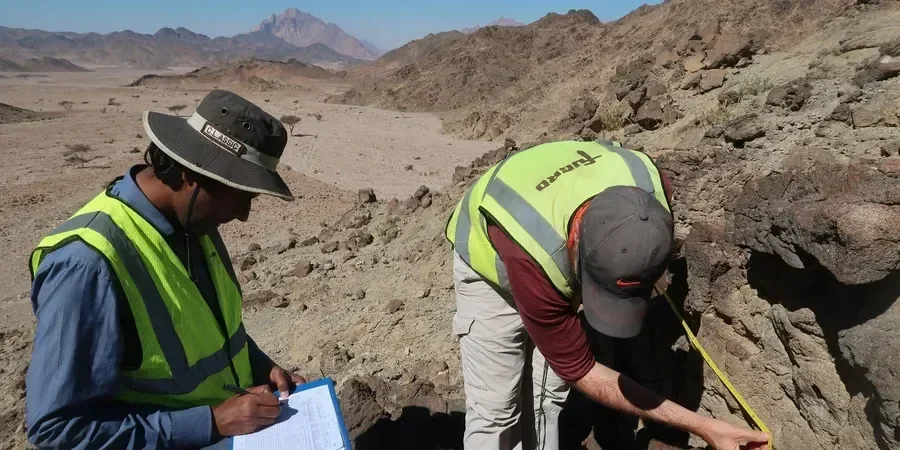
Bradford's glacial till and bedrock topography can amplify ground motion by a factor of 2 or more. A microzonation study captures that variability before design begins.
Method and coverage
Regional considerations
Eurocode 7 and the UK National Annex require that ground conditions be classified into ground types A to E based on Vs30. In Bradford, many sites fall on the boundary between type B (rock) and type C (very dense soil). Misclassifying by even one class can shift the design spectrum by 20–30 %, leading either to undersized foundations or wasted concrete. The local geology also includes buried valleys filled with soft alluvium that can trap and amplify seismic waves. A dedicated seismic microzonation study eliminates that guesswork by providing measured rather than assumed velocity profiles. We follow the NCEER (Youd-Idriss, 2001) guidelines for liquefaction screening and the ASCE 7 site classification criteria to keep the design defensible under peer review.
Standards that apply
Eurocode 7 (BS EN 1997-1:2004) with UK National Annex, ASCE 7-16 Chapter 20 – Site Classification, NCEER (Youd & Idriss, 2001) – Liquefaction Evaluation, BS 5930:2015 – Code of Practice for Ground Investigations
Complementary services
Reconnaissance Microzonation (Desk Study + H/V)
A rapid first-pass assessment using existing geology maps, borehole records and ambient vibration H/V measurements at 5–10 points per hectare. Ideal for early feasibility and site selection. Output includes a Vs30 contour plan and a liquefaction susceptibility map.
Detailed Seismic Microzonation (MASW + Borehole)
Full active MASW lines, array microtremor analysis and targeted boreholes with downhole PS logging. We produce acceleration response spectra for the 475-year and 2475-year return periods, plus site-specific amplification factors. Suitable for critical structures like schools, hospitals and high-rise buildings.
This service complements our laboratory testing work for a complete project analysis.
Typical parameters
Top questions
What is the difference between a seismic hazard map and a microzonation study?
A hazard map shows regional peak ground acceleration for a given return period. A microzonation study refines that value to the site scale by accounting for local soil columns, Vs30 and basin effects. Bradford's variable drift cover means two sites 200 m apart can have different design spectra.
How much does a seismic microzonation cost in Bradford?
A reconnaissance study typically falls between £2,870 and £4,500. A detailed study with MASW, boreholes and full response spectra ranges from £6,200 to £12,980. Prices vary with site area, number of measurement points and access constraints.
Do I need microzonation for a small residential development?
Not always. For a single dwelling on a known rock site a desk study plus one H/V measurement may suffice. But if the site is on alluvium or near a buried valley, a basic microzonation can prevent foundation damage and avoid expensive retrofits later.
What standards do you use for the Vs30 classification?
We follow Eurocode 7 ground types A to E based on measured shear-wave velocity. For liquefaction screening we apply the NCEER (Youd-Idriss, 2001) method. All reports are reviewed by a chartered geotechnical engineer and are suitable for submission to Building Control.