Bradford's geology is dominated by Millstone Grit and Coal Measures, with glacial till overlying bedrock in many areas. These soils often exhibit low to moderate permeability, making infiltration rates a critical parameter for drainage design. We conduct field infiltration tests using Porchet and double-ring infiltrometer methods to establish site-specific hydraulic conductivity values. Before interpreting results, we cross-reference with densidad cono-arena to check in-situ dry density, as compaction state directly affects flow paths. Our team follows the constant-head and falling-head procedures outlined in BS 5930, ensuring consistency across the Bradford area.
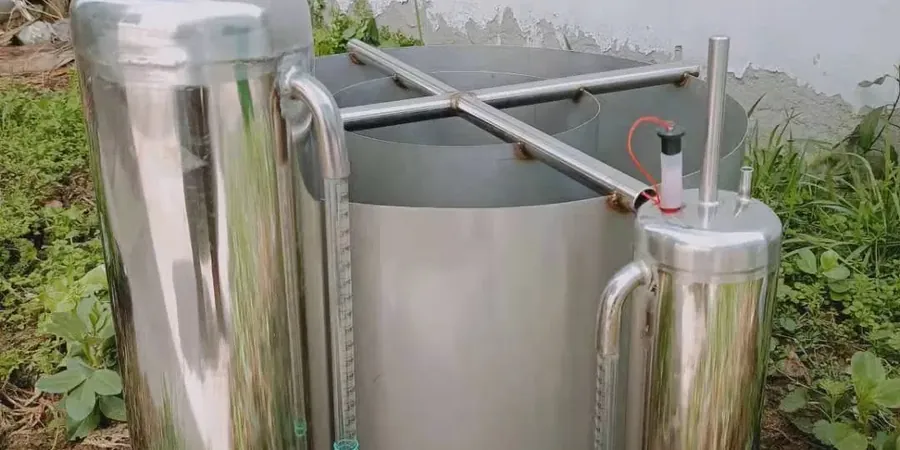
In Bradford's glacial till, steady-state infiltration can take 3 to 6 hours — rushing the test risks overestimating drainage capacity by a factor of 3 or more.
Method and coverage
Regional considerations
A double-ring infiltrometer kit weighs around 15 kg and requires a flat, accessible surface; steep slopes or rubble-strewn ground in Bradford's former mill sites can make setup difficult. The hammer used to drive the rings can disturb soil structure if struck too hard, creating preferential side-wall flow. We always check for side-wall leakage by injecting dye tracer post-test. For tests in very low-permeability clay, we extend the monitoring window to 8+ hours and use a Mariotte bottle to maintain constant head automatically. Ignoring these precautions can produce infiltration rates that are 2 to 5 times higher than reality, leading to undersized drainage systems.
Standards that apply
BS 5930:2015 (Code of practice for ground investigations), BS EN 1997-2:2007 (Eurocode 7 – Ground investigation and testing), CIRIA C753 (The SuDS Manual, 2015)
Complementary services
Porchet Test (Falling Head)
A single-hole test using an augered borehole, suitable for preliminary drainage assessments on small residential sites in Bradford. Quick turnaround — results available within 24 hours.
Double-Ring Infiltrometer (Constant Head)
Two concentric rings driven into the ground to eliminate lateral flow error. Best for planning applications and SuDS approval on commercial or public infrastructure projects throughout Bradford.
Multi-Depth Infiltration Profiling
Tests at 0.5 m increments down to bedrock or water table. Essential for infiltration trench and soakaway design in Bradford's layered glacial till sequences.
This service complements our laboratory testing work for a complete project analysis.
Typical parameters
Top questions
How is an infiltration test different from a permeability test?
An infiltration test measures the rate at which water enters the ground from a free surface, replicating soakaway or SuDS loading. A permeability test (constant/falling head in borehole or lab) measures hydraulic conductivity under fully saturated conditions. For drainage design in Bradford, we often do both: double-ring for infiltration rate and falling-head borehole test for k_sat.
What is the typical cost of an infiltration test in Bradford?
A single Porchet test starts around £280, while a double-ring infiltrometer test ranges from £320 to £380 per test point, including setup, monitoring, and a summary report. Multi-depth profiling or out-of-hours access may add £50-£80 per test.
How many test points are needed for a SuDS application in Bradford?
CIRIA C753 recommends a minimum of 3 test points per infiltration feature, with at least one test at the base depth of the proposed structure. For a typical 0.5 ha Bradford housing development, we usually run 6 to 10 tests across the site to capture spatial variability in the glacial till.
Can infiltration tests be done in winter on Bradford's clay soils?
Yes, but with caveats. Frozen ground or waterlogged soils can give artificially low rates. We install a temporary shelter and pre-wet for 2 hours minimum if the ground is dry. For tests between November and March, we recommend scheduling during a dry spell and using a heated Mariotte bottle to prevent ice formation in the supply line.