When we mobilise for a pavement investigation in Bradford, the first thing our crew does is check the access for the dynamic cone penetrometer and the trailer-mounted coring rig — tight terraced streets around Manningham and Little Germany demand a compact setup. We use a combination of window sampling and machine-excavated trial pits to retrieve undisturbed samples for CBR testing, which is essential for both flexible and rigid pavement design. The underlying Carboniferous Millstone Grit and glacial till deposits around the Aire Valley create highly variable subgrade conditions, so we typically carry out falling weight deflectometer surveys alongside laboratory California Bearing Ratio tests to correlate in-situ stiffness with laboratory strength. This dual approach ensures the design thicknesses are neither over-specced (wasting budget) nor under-specced (risking premature failure). Understanding the local geology is critical before specifying the subgrade CBR design value for a new road or car park.
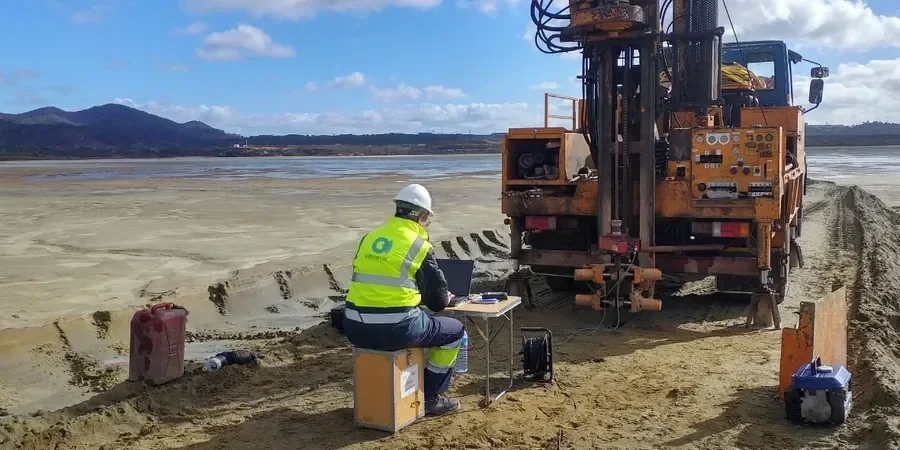
Bradford variable glacial till and high rainfall mean soaked CBR values often fall below 3%, demanding thicker pavement layers or Improvement.
Method and coverage
Regional considerations
The Pennine climate means Bradford receives over 900 mm of rainfall annually, keeping the subgrade moisture content consistently near or above the plastic limit. This saturation risk is the biggest threat to pavement performance — a soaked clay subgrade can lose 50% of its design strength within a single wet winter. If the road geotechnics investigation does not include soaked CBR testing on the worst-case moisture condition, the pavement will likely develop rutting and cracking within two to three years. We always advise clients to schedule the investigation after a wet period to capture realistic moisture profiles, and we incorporate a drainage assessment to prevent water ponding in the capping layer.
Standards that apply
BS EN 1997-2:2007 (Eurocode 7 – Ground investigation and testing), DMRB CD 225 (Design for new pavement construction), BS 1377-4:1990 (Methods of test for soils – compaction and CBR), BS 5930:2015 (Code of practice for ground investigations)
Complementary services
Subgrade Investigation & CBR Testing
Trial pitting, window sampling, and DCP surveys across Bradford to determine in-situ and soaked CBR values. Our UKAS-accredited lab performs compaction (2.5 kg & 4.5 kg rammer), particle size, and plasticity tests to classify the subgrade and recommend capping layer thickness.
Pavement Condition & Structural Assessment
Falling weight deflectometer (FWD) surveys and coring for existing roads, plus laboratory resilient modulus testing on recovered cores. We combine these with traffic load analysis to design overlays, reconstruction, or full-depth pavement replacements for Bradford highways.
Typical parameters
Top questions
How much does a road geotechnics study for a new Bradford development cost?
A typical investigation for a small housing development (5-10 trial pits, CBRs, classification testing) ranges from £1,200 to £2,800. For larger commercial sites requiring FWD surveys and full pavement design, the cost can reach £3,230. The final price depends on site access, number of test locations, and whether soaked CBRs are needed.
Why do Bradford roads often fail after a few years?
The main cause is the variable glacial till subgrade combined with high rainfall. Many older roads were built on unprepared subgrade with no capping layer. When the clay gets wet, it softens and the pavement loses support, leading to cracking and rutting. A proper road geotechnics investigation identifies these weak zones early so the design can include a granular capping layer or lime stabilisation.
What is the difference between in-situ CBR and soaked CBR for pavement design?
In-situ CBR measures the subgrade strength at its natural moisture content during the investigation. Soaked CBR simulates the worst-case scenario after prolonged rainfall by saturating the sample for four days. Because Bradford receives high rainfall, the soaked CBR is usually the governing value for design — it ensures the pavement performs even during wet winters.
Do I need a full geotechnical report for a small car park in Bradford?
Yes, even a small car park needs a subgrade assessment. Without it, you risk differential settlement and surface cracking within two years.