Foundation engineering in Bradford demands a rigorous understanding of local ground conditions, structural loads, and regulatory frameworks to ensure long-term stability and safety. This category encompasses the full lifecycle of foundation design and analysis, from initial site investigation through to detailed design of shallow and deep foundation systems. For a city with Bradford's industrial heritage and varied topography, getting the foundations right is not merely a technical exercise—it is a critical investment in the durability of any structure, whether a Victorian terrace renovation, a new mill conversion, or a large-scale commercial development on a brownfield site. A comprehensive approach, often beginning with a detailed settlement analysis, is essential to mitigate risks associated with differential movement and to comply with stringent building control requirements.
The geology beneath Bradford is predominantly characterised by Carboniferous Millstone Grit and Coal Measures, often overlain by variable thicknesses of glacial till, alluvium, and made ground. The steep-sided valleys and numerous watercourses create complex ground profiles where competent rock can be shallow in one location and deep beneath compressible soils in another. Made ground is particularly prevalent, a legacy of centuries of mining, quarrying, and industrial activity, posing significant challenges for foundation design due to its unpredictable composition and potential for voids. Equally, the presence of shrinkable clay in some of the glacial deposits requires careful consideration of seasonal moisture changes. This inherent variability makes a thorough ground investigation and a precise bearing capacity analysis absolutely fundamental before any foundation type is selected.
All foundation design in Bradford must adhere to the structural Eurocodes, specifically Eurocode 7 (BS EN 1997: Geotechnical design) and its UK National Annex, alongside Eurocode 2 for concrete structures. The British Standards Institution's BS 8004:2015 provides a complementary code of practice for foundations, offering detailed guidance on site investigations, design, and construction. Compliance with these standards is mandatory under the Building Regulations 2010, enforced locally by Bradford Council's Building Control department. For projects involving contaminated land, which is common on brownfield sites, additional requirements from Part 2A of the Environmental Protection Act 1990 and the National Planning Policy Framework (NPPF) will dictate robust risk assessments and often influence the choice between a raft/mat foundation design and a deep piled solution to isolate the structure from hazardous ground.
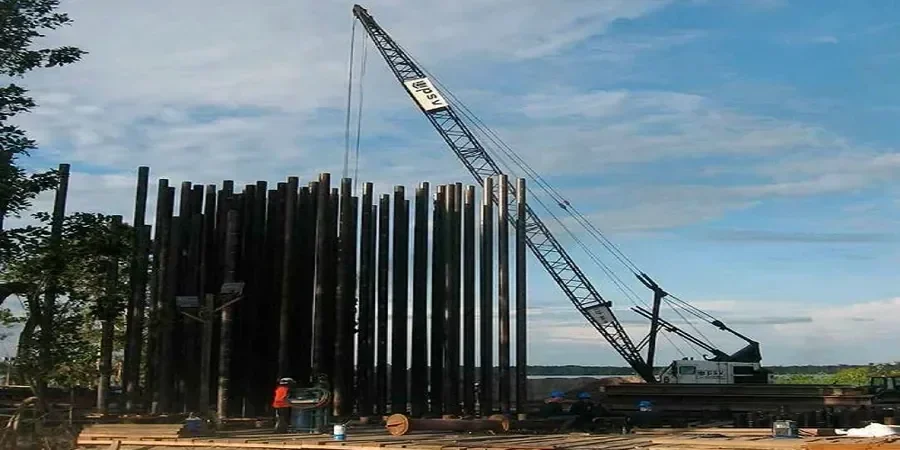
The range of projects requiring specialist foundation engineering in Bradford is extensive. Low-rise residential extensions on competent ground may be well-suited to a cost-effective shallow foundation design, such as traditional strip or pad footings. However, larger commercial structures, apartment blocks, or buildings on poor ground often necessitate more sophisticated solutions. Deep foundations are regularly specified to bypass weak near-surface materials, with options including driven pile design for rapid installation in granular soils or micropile design for restricted-access sites and underpinning existing structures. The regeneration of Bradford's city centre and the redevelopment of its historic industrial zones consistently drive demand for these advanced geotechnical services, ensuring that new and refurbished structures stand on safe, predictable, and code-compliant foundations.
Common questions
What are the most common ground-related risks for foundations in Bradford?
The primary risks include variable made ground from historical mining and industrial use, which can contain voids, obstructions, and contaminants. Shallow coal seams and steep valley geology lead to unpredictable rockhead depths. Glacial till can be shrinkable, and the presence of numerous culverted watercourses increases the risk of localised softening and erosion, making a detailed site investigation essential.
Which UK regulations are mandatory for foundation design in Bradford?
Foundation design must comply with the Building Regulations 2010, enforced locally. Technically, this means adherence to Eurocode 7 (BS EN 1997) with its UK National Annex and the guidance in BS 8004:2015. For sites with contamination, the Environmental Protection Act 1990 and the NPPF also apply, often dictating the foundation type to break the pathway between contaminants and building users.
When is a deep foundation necessary instead of a shallow one in Bradford?
Deep foundations, like driven or micropiles, are necessary when competent bearing strata are too deep for economical shallow excavation, or when near-surface soils are weak, highly compressible, or contaminated. This is common on Bradford's brownfield sites, in valley bottoms with thick alluvium, and for underpinning historic structures where minimal disturbance is critical.
How does a raft foundation differ from a traditional strip footing?
A raft foundation is a large, continuous concrete slab that spreads the building load across the entire footprint, reducing pressure on the ground. It is preferred over individual strip footings on sites with low bearing capacity or where differential settlement is a concern, such as on variable made ground or soft clays common in parts of Bradford.