We were called to a site off Thornton Road last month where an old mill pond had been infilled decades ago. The ground was too soft to walk on without boards. The client needed real undrained shear strength values for a new commercial slab. That is exactly where the field vane shear test (VST) earns its keep. We pushed the vane into soft clay at 1 m intervals and recorded peak and remoulded torque. The results gave us sensitivity ratios and a clear picture of the bearing capacity. For the shallow foundations we also ran a plate load test to verify stiffness at working load, and a quick soil classification to confirm the high organic content. Bradford has plenty of these legacy soft zones, and the VST is the only in-situ method that captures undisturbed strength reliably.
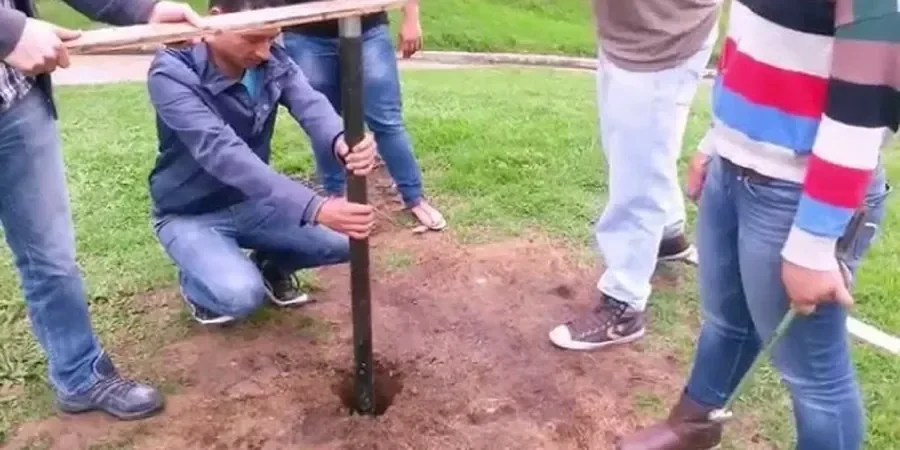
In Bradford's soft soils we often see sensitivity values above 8, which means severe strength loss if disturbed.
Method and coverage
Regional considerations
Eurocode 7 (BS EN 1997-2:2007) requires that undrained shear strength be determined by at least two independent methods in soft ground. In Bradford that means you cannot rely solely on hand penetrometer or torvane readings from the surface. The field vane shear test (VST) is the reference method for design in saturated clays and peats. If you neglect it, you risk overestimating bearing capacity by a factor of two or more. That leads to differential settlement, slab cracking, or even rotational failure. We have seen it happen on small developments near Bradford city centre where the glacial till pinches out and soft lacustrine clay appears without warning. A proper VST campaign catches that variability before concrete is poured.
Standards that apply
BS 1377-9:1990 — Methods of test for soils: in-situ vane shear test, BS 1377-9 — Standard Test Method for Field Vane Shear Test, BS EN 1997-2:2007 — Eurocode 7: Ground investigation and testing
Complementary services
Standard VST profiling
Continuous vane testing at 1 m depth intervals from the surface down to refusal or 25 m depth. We record peak and remoulded torque and provide a full cu vs. depth profile with sensitivity log. Suitable for soft clays, silts, and peats in Bradford's valley floors.
VST with pore pressure monitoring
Advanced VST using a vane equipped with a pressure transducer. We measure the pore pressure response during shearing to separate drained and undrained components. Ideal for organic soils and very soft clays where the standard VST alone may underestimate strength.
Typical parameters
Top questions
What is the field vane shear test and when is it used in Bradford?
The field vane shear test (VST) is an in-situ method that measures the undrained shear strength of saturated clays and peats. A four-bladed vane is pushed into the soil and rotated slowly until failure. It is the preferred test for soft ground in Bradford because it captures the real strength of sensitive materials that would be disturbed during sampling.
How much does a field vane shear test cost in Bradford?
A standard VST profiling campaign in Bradford typically costs between £430 and £1,030 depending on the number of test points, depth required, and site access conditions. This includes mobilisation, full data logging, and a certified test report. Additional points or deeper testing may increase the cost.
What is soil sensitivity and why does it matter for Bradford projects?
Soil sensitivity is the ratio of peak undrained strength to remoulded strength. A value above 8 indicates quick clay behaviour. In Bradford's soft alluvial deposits, high sensitivity means that any excavation or pile driving can destroy the soil structure, leading to sudden strength loss. The VST measures both peak and remoulded strength in one test, giving you that sensitivity value directly.
How does the VST compare with laboratory triaxial tests for soft clay?
The VST measures undisturbed strength at the actual in-situ stress state, avoiding the sample disturbance that affects laboratory UU and CIU triaxial tests. In Bradford's sensitive clays, lab tests can underestimate cu by 30-50%. We recommend running both: VST for the primary strength profile and triaxial on block samples for stress-path specific parameters.